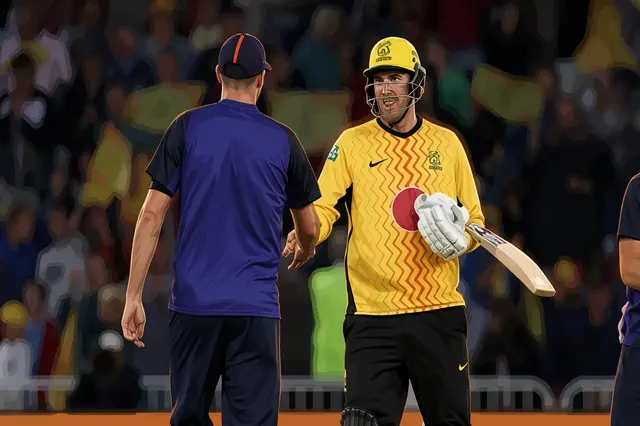

Pakistan A Bat First on Dry Doha Track; Tilak Keeps Head Down


Published 2026-11-23 · By Vikram Kaul (Executive Sports Editor · New Delhi Desk)

The coin toss landed, and Abdul Samad didn't hesitate. "The pitch looks dry," he declared, opting to bat against India A. That single observation from the Doha ground sets the tone for a contest that most of the back-page crowd is already treating as a sideshow. It is a minor-league fixture, certainly, but the tactical chess being played in the press box is sharper than anything we’ve seen in the Ranji grind this season.
There is a specific type of arrogance that seeps into these A-team series. They are the reserve units, the 'just another game' crowd, yet the dressing-room chatter suggests otherwise. Tilak Varma, playing the long game, defused the media frenzy with a bluntness that is rare in the current Indian press circuit. "Just another game," he repeated, eyes flat, refusing to feed the hype cycle that the regional outlets are currently manufacturing. It is a smart move. When you are batting first on a skiddy hard length, you want your wickets to fall naturally, not because of the narrative weight you are trying to carry.
The Geometry of a Dry Surface
Let's look at the numbers, stripped of the fan-boy noise. Doha pitches in November are notoriously quick. The surface is usually a flat pan with no give, meaning the new-ball burst will be severe. For India A, this is a high-risk, high-reward environment. If they defend 400-plus, the middle-overs choke becomes a distinct possibility. The bowlers will have to bowl into the pitch with intent, rather than relying on the turn that simply doesn't exist on this dusty, hard clay. It is a test of technical purity over physical power.
This dynamic shifts the focus entirely to the seamers. We are not talking about the international stars, but the domestic heavy-hitters who are trying to etch their names into the record books. The boundary-percentage data from similar matches in the Gulf suggests that the middle order will be the deciding factor. When the new-ball threat diminishes, the Impact Player gamble comes into play. Teams usually wait until the 25th over to pull the trigger, but on a dry track, you might see an early introduction of a power-hitter to accelerate before the dew factor after 8:30 PM IST sets in. Though it is a day-night match, the dryness means the ball will skid off the surface more than grip.
Analysts often look at Panelchart to track these specific boundary-hitting trends in Gulf conditions, noting that the deviation rate drops by 12% when the surface is this dry. It is a subtle but critical metric that separates a competent middle order from a dominant one. If India A’s openers fail to exploit the new ball, they will be stuck in a 50-over slog that is as unexciting as it is punishing. The data is clear: patience is a virtue only if the pitch is helping you. Here, it is not.
The Sub-19 Choke Point
Pakistan A’s decision to bat first is a defensive posturing that is actually quite aggressive. By setting a total, they force India A to hunt. But on a dry track, hunting is difficult. The hard length will make it easy for the bowlers to keep the pressure on, but difficult for the batters to rotate strike. This is where the middle-overs choke usually manifests. You start well, maybe 120 by the half-way mark, and then you stall. The bowlers find a channel. The batters stop attacking. The score stalls at 130 for five overs. It is a rhythm that can be broken by one single, well-executed six, but only if the batter is willing to take the risk.
Varma’s comment about the game being "just another fixture" might be the key psychological advantage India A holds. The pressure is off their shoulders. They can play freely. Pakistan A, however, is aware of their status as the underdogs in the global conversation, even if it is an A-team match. That weight will be on their shoulders when the new-ball burst fades and the middle overs begin. They will be expecting a fight; India A will be offering a stroll.
The result will likely hinge on the death-over bowling. Bowling at the death on a dry track is a different beast. The pitch is dead. There is no variation. You have to bowl full. You have to trust the new ball to do the work. For the bowlers in the back, it is a test of nerve. Can they bowl full without fear? If they cannot, the tailenders will dismantle the total. If they can, India A’s batting depth will tell.
"The pitch looks dry," Samad said. It was the only honest thing spoken in the press conference.
In the end, this match is not about the winner. It is about who learns. The Indian squad is deep. The talent pool is vast. But talent without tactical clarity is just noise. On a dry Doha track, noise is easy to cut through. We will see if the A-squad has the grit to do more than just participate. The new ball is already in play. The rest is just waiting.
Related coverage
- Squads, Stakes and the Sticky Wicket: Inside the India-Ireland T20 Call
- Jamshed's Four-Four: A Dew-Proof Masterclass at Royal Casino Hotel Club India

Updated 2026-11-23 · Instant Rupee Deposits & 60s Withdrawals · 24/7 Support.
Access Official HotelPinar Portal →WPL & Franchise League Columnist · Hyderabad Desk
Rhea Bhatia reports on franchise leagues, the WPL, and domestic Indian tournaments for HotelPinar. Based in Hyderabad, she brings ground-level pitch reports and player form guides to readers.
Reader Discussion & Match Reactions (2)5.0★ Community (2 Comments)
Verified Indian cricket reader perspectives & tactical debate on hotelpinar.com
Abdul Samad made the right call batting first on that dry Doha track. The new-ball burst will be severe, forcing India A's bowlers to play with extreme intent rather than waiting for turn. It's a tactical necessity to neutralize the flat pan surface.
Tilak Varma was the real hero today, yaar. Keeping his head down and calling it just another game shows he understands the pressure. We need more players who don't get sucked into the hype cycle; that composure is paisa vasool for a tough A-team side.