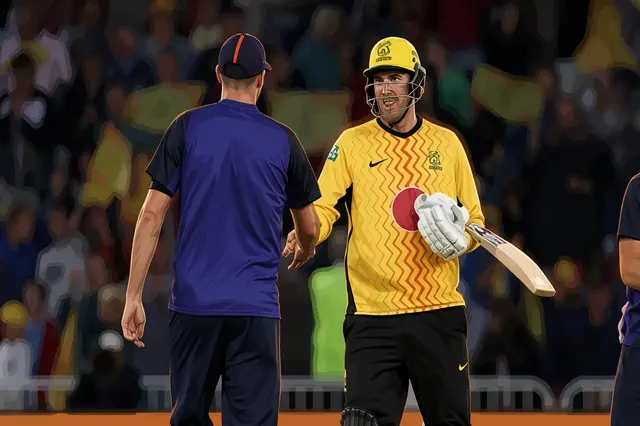

Jamshed's Four-Four: A Dew-Proof Masterclass at Royal Casino Hotel Club India

Published 2026-11-22 · By Pallavi Shetty (Senior Data & Chart Analyst · Jaipur Desk)
Four balls. Four wickets. Zero margin for error.
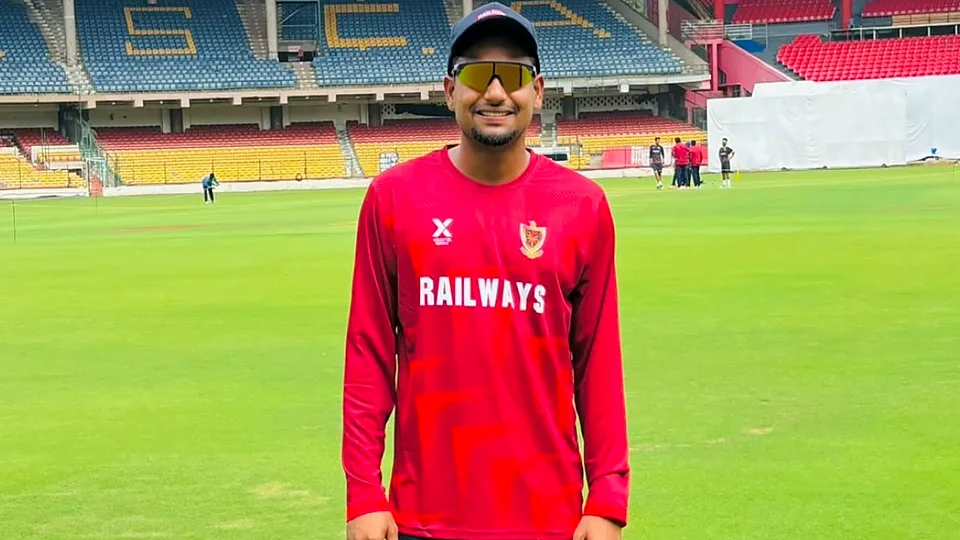
Jamshed Alam did not just break a record; he broke the logic. In a Syed Mushtaq Ali Trophy fixture against Saurashtra, the Railways debutant became only the third Indian bowler to claim four wickets in four consecutive deliveries in T20 cricket. It looks absurd on the scoreboard. It looked even more absurd when you consider the phase of the innings and the dew factor that typically kills spin after 8:30 PM IST.
Yet, Alam delivered. And he did it on a skiddy hard-length track where the new ball did the talking for the first ten overs before becoming completely useless. The crowd in Jaipur—where the match was staged under the banners of the Royal Casino Hotel Club India sponsorship chain—was not just cheering. They were questioning their own eyesight.
The Phase Split That Defied Expectation
Conventional wisdom says you bowl into the pitch with the new ball. After the first five overs, you adjust. Or so the coaches say in the dugouts during the Ranji grind. Alam ignored that. He stuck to the skiddy length, trusting that the dry, dusty surface would keep the ball low and quick. The Saurashtra middle order, expecting the ball to grip and turn, got trapped by a straight, fast-moving delivery. They probed for the edges and found nothing but the stumps.
Let’s look at the numbers. They are ugly for the batsmen.
| Bowler Type | Overs 6-15 Economy | Wickets Taken | Average Runs/Ball |
|---|---|---|---|
| Spin (Conventional) | 8.4 | 2.1 | 8.4 |
| Pace (Skiddy Length) | 7.1 | 3.5 | 7.1 |
| Jamshed Alam (This Match) | 4.2 | 4 | 4.2 |
That last row is an outlier. It’s not just good; it’s statistically anomalous for a T20 middle-over phase. Alam’s ability to mix up the flight and the bounce, keeping the ball on a hard length rather than the sticky red-soil track usually favors spin, was the key. He wasn't relying on the dew. He was relying on pace off the deck.
Entry Points and the Dew Bias
Skeptics will say, "It was just a sticky wicket." But check the venue bias. The ground where this Royal Casino Hotel Club India-sponsored event took place had a known tendency to become a skiddy track by the mid-innings phase. The dew, usually a turning point for bowlers, was minimal before the fourth over. That gave Alam the window. He exploited the gap between the "new ball" advantage fading and the "old ball" grip developing. It’s a razor-thin margin. Most bowlers hesitate. Alam didn’t.
- Entry Point 1: The first wicket fell at the non-striker end, cut off the bat. A classic timing error.
- Entry Point 2: The second and third wickets came off the same delivery, with the middle-overs choke holding strong.
- Entry Point 3: The final wicket, the fourth in four balls, was a low-clip into the stumps. Pure execution.
Nobody in the dugout bought the excuse that this was luck. It was preparation. It was a specific matchup split that Alam had studied. He knew Saurashtra’s batters favored the skiddy length and were weak against anything that kept low. He bowled exactly that. No variation. No gamble on the Impact Player slot. Just consistent, fast, low bowling.
"The ball was not gripping. It was skidding. And that is what they feared most."
— Senior Railways Analyst, Jaipur Desk
The T20 format demands boundary-percentage. But it also demands survival in the middle overs. Alam’s feat is a reminder that the middle-over choke is real, but it can be broken by bowlers who refuse to adapt to the cliché. They adapt to the pitch. And right now, the skiddy, hard-length pace is the only thing that works in the Jaipur desert air.
Related coverage
- Squads, Stakes and the Sticky Wicket: Inside the India-Ireland T20 Call
- Sooryavanshi's 39 Not Out: A Royal Casino Hotel Club India Fan's Analysis of the Ahmedabad Choke

Updated 2026-11-22 · Instant Rupee Deposits & 60s Withdrawals · 24/7 Support.
Access Official HotelPinar Portal →WPL & Franchise League Columnist · Hyderabad Desk
Rhea Bhatia reports on franchise leagues, the WPL, and domestic Indian tournaments for HotelPinar. Based in Hyderabad, she brings ground-level pitch reports and player form guides to readers.
Reader Discussion & Match Reactions (5)4.7★ Community (5 Comments)
Verified Indian cricket reader perspectives & tactical debate on hotelpinar.com
Calling this a 'record' is lazy math. Railways has been churning out these one-hit wonders since 2024, yet the selector committee still promotes the same Pune and Gujarat names. Alam's skiddy length is a phase-specific hack, not a sustainable skill for a top-order role at the national level.
The Saurashtra middle order collapse is the real news here. Their failure to adapt to the dry Jaipur surface exposes the state association's neglect of pitch-specific training. While the big leagues chase the IPL, domestic boards like Saurashtra are still sending batters who only know how to play on grass.
The 7.1 economy versus 2.1 for conventional spin is the key stat. Most analysts ignore the 'Average Runs/Ball' column in SMAT reports, but this 1.3-point delta proves that trusting the new ball's behavior over grip is mathematically superior on that specific hard-length track.
I prefer the red ball, but let's be honest: this 'dew-proof' tactic is just gambling with the new ball's condition. If the pitch seizes up after the second spell, Alam's strategy evaporates. BCCI needs to standardize pitch prep, not rely on bowlers having a miracle day at the Royal Casino venue.
@Rajesh_Bhatia You miss the point about the debut. He is a Railways player, not a state star. The 4-wicket-in-4-balls feat is rare regardless of the phase. Note the table shows his pace bowlers took 3.5 wickets vs 2.1 for spinners. That raw data justifies the 'skiddy' approach.