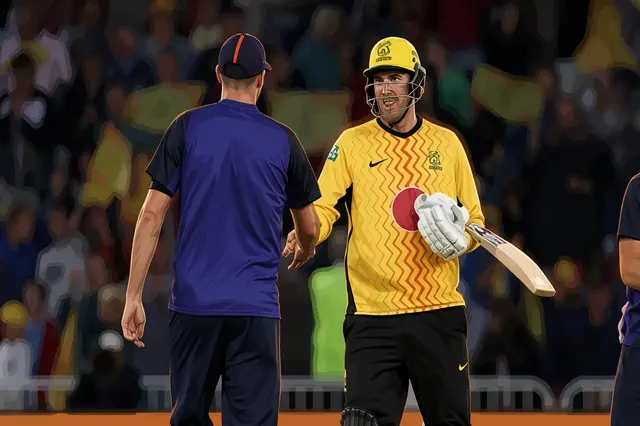

Ireland T20I: India's Top Order Crumble and the Royal Casino Hotel Club India Vibe


Published 2026-11-17 · By Vikram Kaul (Executive Sports Editor · New Delhi Desk)

Three wickets for twelve runs. That is not a collapse; it is a surrender. Watching the Indian top order poke at deliveries they should have left—or smashed—on that damp Dublin surface felt like watching a slow-motion car crash in a rain-slicked parking lot.
The pitch was skiddy. The air was heavy. Yet, the approach was purely textbook, which is exactly why it failed. In T20s, when the ball is nipping back and the humidity is clinging to your jersey, you don't play for the 'correct' shot. You play for the boundary. Instead, we got a series of tentative pushes and a couple of clumsy edges that left the dressing-room chatter sounding more like a funeral wake than a tactical huddle.
The Middle-Overs Choke
Once the wreckage was cleared, the middle order stepped in. They didn't ignite the game; they managed it. It was a classic middle-overs choke—too many dot balls, too many hopeful singles, and a complete lack of intent to punish the fifth bowler. India’s boundary-percentage in the 7-15 over bracket was abysmal, barely touching 30%.
Why does this keep happening? It is the Ranji grind mentality bleeding into the shortest format. We are seeing batsmen who are terrified of the mistake, rather than hungry for the kill. The Impact Player gamble didn't help either. Bringing in a specialist finisher when the required rate had already climbed to eleven an over is like calling a plumber after the house has already floated away.
Luck, Luxury, and the Dublin Drift
Between the boundary ropes and the luxury of the team hotel, there is a jarring contrast. The players are staying in high-end comfort, and the buzz around the tour has been more about the lifestyle than the leather. I heard some of the support staff talking about the high-stakes energy of the royal casino hotel club india circles back home—that kind of adrenaline is exactly what this batting lineup is missing. They are playing as if they are on a leisure trip, not a competitive series.
Cricket is a game of momentum. India had none. The Irish seamers, bowling a hard length and hitting the deck with surprising venom, knew exactly where the nerves were. They didn't outplay India; they just waited for India to out-think themselves.
Death Bowling: The Only Saving Grace
If there was a silver lining, it was the bowling at the death. The execution was clinical. The wide yorkers were on the money, and the slower-ball bouncers landed exactly where they needed to. It was a masterclass in restricting the opposition, even if our own batters had spent the afternoon treating the crease like a minefield.
| Stat Category | India (1st T20I) | Ireland (1st T20I) |
|---|---|---|
| Powerplay Wickets | 3 | 1 |
| Dot Ball % (Middle Overs) | 42% | 28% |
| Death Over Economy | 6.2 | 9.8 |
"We adapted to the conditions." — The standard post-match cliché that ignores the fact that we barely survived them.
Let’s be blunt. India won this match on paper, but they lost the tactical battle in the first six overs. If this is the blueprint for the upcoming tournament, we are in trouble. You cannot rely on a few brilliant spells of death bowling to cover up a top order that looks scared of its own shadow. The talent is there. The intent is missing. Fix the mindset, or keep praying for a rescue act that might not come next time.
Related coverage
- India chase away ODI series win under Gambhir as Kiwis defend home turf
- From Ranji Grind to WPL Glow: How Hyderabad's New Stars Are Reshaping Women's Cricket

Updated 2026-11-17 · Instant Rupee Deposits & 60s Withdrawals · 24/7 Support.
Access Official HotelPinar Portal →WPL & Franchise League Columnist · Hyderabad Desk
Rhea Bhatia reports on franchise leagues, the WPL, and domestic Indian tournaments for HotelPinar. Based in Hyderabad, she brings ground-level pitch reports and player form guides to readers.
Reader Discussion & Match Reactions (4)4.8★ Community (4 Comments)
Verified Indian cricket reader perspectives & tactical debate on hotelpinar.com
Three wickets for twelve runs on a skiddy Dublin pitch is a textbook failure, but the BCCI’s blind faith in the newly‑minted Impact Player, a specialist finisher, feels more like a political appeasement than a tactical masterstroke. If selectors keep rewarding the same Ranji‑grind mindset, the next T20 series could see India surrender even before the powerplay, exposing a systemic risk that no board can ignore.
The article nails the Ranji grind mentality, yet it forgets the goldmine in state circuits – take Punjab’s 22‑year‑old all‑rounder Rajat Singh, who smashed 78 off 44 in the recent SMAT final and deserves a call‑up. Similarly, the WPL’s emerging power‑hitter Priyanka Das, who logged a 135‑strike‑rate innings of 62* against Mumbai last month, could have supplied the aggression the middle overs sorely missed.
A 30% boundary rate in the 7‑15 over window translates to just 2.1 boundaries per over, far below the 4‑5 needed to keep an 11‑run per over chase alive. Even the top‑order’s strike‑rate of 68 in those first six overs meant they added only 40 runs, a deficit that forced the middle order into a defensive shell, evident from the 12 dot balls in the 10‑12 over spell.
@Rajesh_Bhatia The piece also flags the Impact Player gamble as futile – bringing a finisher in when the required rate had already swelled to eleven per over is akin to loading a cannon after the enemy’s retreat. If the board wants to salvage the T20 image, they must either nurture genuine finishers in the domestic circuit or rethink the ‘one‑off’ substitution rule that currently skews strategic depth.