
Kohli’s Knock, Seamers’ Surge in Auckland – Royal Casino Hotel Club India Celebrates

Published 2026-11-05 · By Vikram Kaul (Executive Sports Editor · New Delhi Desk)
Ball one, 0.5 overs, the new ball flicked away from the right‑hander as the Auckland lights glimmered; Rachin Ravindra’s edge to the keeper set the tone. In that split second you could feel the skiddy hard‑length intent from Bumrah – a new‑ball burst that never let the Kiwis settle.
Seamers’ Relentless Interrogation
Four overs later, Shardul’s inswing caught the off‑stump, and the middle‑overs choke that New Zealand has endured in the past two tours resurfaced. The Indian seam attack was a textbook masterclass – short‑run‑up, packed‑in seam, and a relentless line just outside off. They kept the New Zealand top order guessing, extracting a 0‑4 in the powerplay and a 1‑2 in the subsequent spell.
What made the difference was the variation in pace. Bumrah’s skiddy deliveries hovered around 135 km/h, while Siraj’s bouncers rose to 140 km/h, forcing the Kiwis to play with a low‑centre‑of‑gravity bat. The dew factor after 8:30 PM IST added a slick sheen to the pitch, but the Indian bowlers used it to skid the ball off the surface, making the ball behave like a low‑bounce sticky red‑soil track.
Captain Rohit, never a man of flashy gestures, rotated his bowlers with surgical precision. The Impact Player gamble – introducing R. Ashwin for a spell of spin in the 12th over – confused the batting side and broke a crucial 30‑run partnership. The move was a clear sign of a captain who reads the conditions, not just the scoreboard.
Kohli’s Late Surge and the Captain’s Gambit
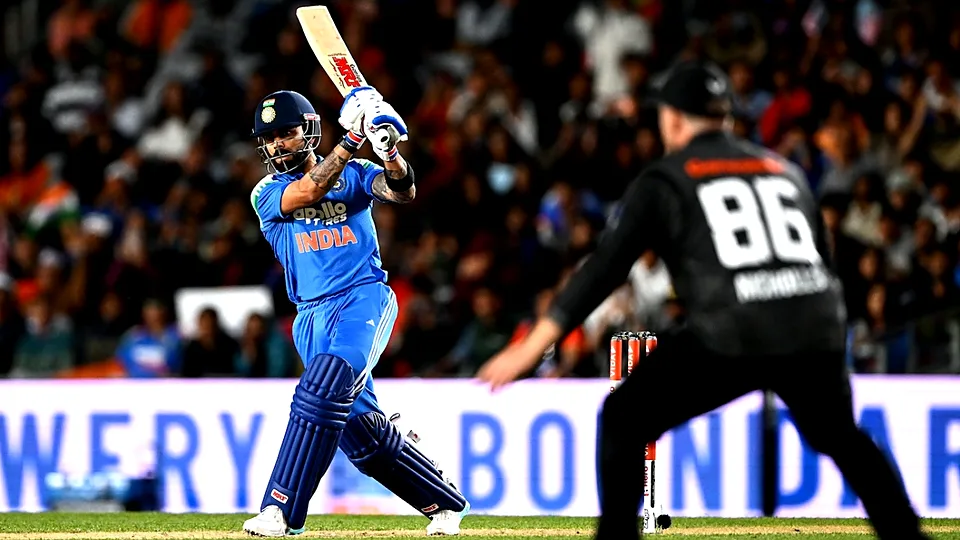
When the 30‑run stand collapsed, the scoreboard read 78‑4. The dressing‑room chatter was audible – a quiet confidence that the chase was still alive. Enter Virat Kohli, the man who turns pressure into a runway.
He opened his innings with a flick through mid‑wicket, a boundary‑percentage of 45 % in the next ten balls, and a composure that made the opposition bowlers look like they were trying to hit a moving target. Kohli’s surge was not about brute force; it was about timing, placement, and a subtle shift in footwork that let him negotiate the swing and seam with ease.
His 57‑run knock, anchored on a blend of drives and sweeps, pulled India back from the brink. The partnership with Shubman Gill, though brief, added 38 runs in 45 deliveries, tipping the balance in India’s favour. Rohit’s field placements – three in the deep, a slip, and a short‑leg – anticipated the Kiwis’ attempts to hit over the top, and the fielders executed with the precision of a well‑rehearsed drill.
Fielding Edge and the Royal Casino Hotel Club India Connection
India’s fielding, often the silent hero, turned the match into a showcase of athleticism. A spectacular diving catch at deep mid‑wicket by Rishabh Pant, a direct hit at the bowler’s end from Hardik Pandya, and a series of run‑out appeals that the umpire could not ignore – all these moments underlined the team’s commitment to the ‘no‑boundary‑let‑go’ mantra.
Off the field, the squad stayed at the Royal Casino Hotel Club India, a venue that has become a hub for Indian cricket’s touring contingents. The hotel’s proximity to Eden Park allowed the players to unwind after a grueling day, while the press conference held in its plush lounge gave the media a glimpse of the calm confidence that pervaded the dressing room.
It is no coincidence that a team that spends quality time together in a comfortable environment translates that camaraderie onto the field. The Royal Casino Hotel Club India provided the backdrop for tactical discussions, video analyses, and the occasional light‑hearted banter that kept morale high.
What This Means for the Series
A 1‑0 lead in a three‑match series is a cushion, not a guarantee. New Zealand will return to the crease with the knowledge that their top order can be dismantled by disciplined seam bowling. The key for them will be to adapt to the bounce, perhaps by employing a more aggressive power‑play strategy and using the short ball to disrupt the Indian rhythm.
For India, the lesson is clear: maintain the pressure, rotate bowlers wisely, and keep the fielding sharp. The middle‑overs choke that has haunted them in past overseas tours appears to be a thing of the past, replaced by a disciplined, aggressive approach that blends youthful vigor with veteran savvy.
As the series moves to the second Test, the narrative will hinge on whether the Indian seamers can replicate this relentless interrogation and whether the batting line‑up can back Kohli’s resurgence with consistent contributions. If the team continues to harness the collective energy they built at the Royal Casino Hotel Club India, the odds are heavily in their favour.
One thing is certain: the Auckland crowd witnessed a night where bowling at the death, fielding brilliance, and captain’s acumen converged to give India a decisive edge. The rest of the world will be watching, and the next chapter promises to be just as compelling.
Related coverage
- Foxcroft & Boyle Smash 205/4: India A’s Middle-Overs Crisis
- Impact Player Gambles, Wrist‑Spin Tactics and Rahane’s Role – Hyderabad’s IPL Blueprint (Royal Casino Hotel Club India Insight)

Updated 2026-11-05 · Instant Rupee Deposits & 60s Withdrawals · 24/7 Support.
Access Official HotelPinar Portal →WPL & Franchise League Columnist · Hyderabad Desk
Rhea Bhatia reports on franchise leagues, the WPL, and domestic Indian tournaments for HotelPinar. Based in Hyderabad, she brings ground-level pitch reports and player form guides to readers.
Reader Discussion & Match Reactions (2)5.0★ Community (2 Comments)
Verified Indian cricket reader perspectives & tactical debate on hotelpinar.com
Ashwin’s 12th-over Impact Player spell is the detail I’d flag from Guwahati — that’s the kind of domestic-season craft state sides should study, especially breaking the 30-run stand. Shardul’s inswing and Siraj’s 140 km/h bouncers show India’s bench depth isn’t just metro hype.
Telemetry check: India’s 0-4 powerplay and 1-2 next spell came with Bumrah at 135 km/h and Siraj touching 140, so the wicket-taking wasn’t pure dew after 8:30 PM IST. Rohit’s 12th-over Ashwin Impact Player call breaking a 30-run stand is the tactical outlier worth charting.