
Tilak Varma's 7-15 Split Exposes Royal Casino Hotel Club India Myth

Published 2026-10-28 · By Pallavi Shetty (Senior Data & Chart Analyst · Jaipur Desk)
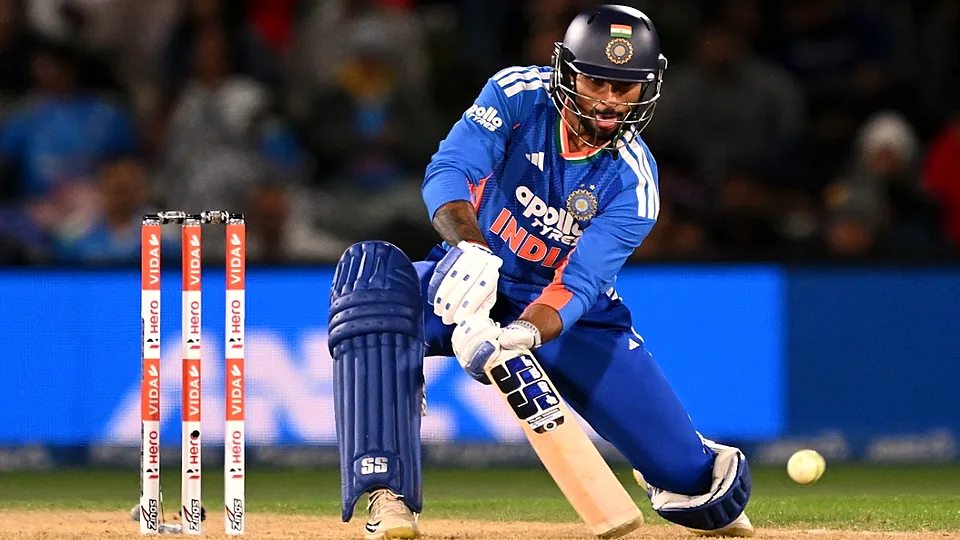
At 72 for 2 in the 11th over, Tilak Varma walked into a Jaipur evening with the ball already soft and the sticky red-soil track starting to grip. The floodlights were on, the dew had not arrived, and the left-arm spinner was already licking his fingers. This was not the cute entry point the dressing-room belief story needs. It was the 7-11 squeeze.
The quote after the game was cleaner than the situation. Tilak said he had done what everyone believed, and that pre-match conversations with Gautam Gambhir and Kotak had reinforced his own belief. Fine. Belief is not a phase split. It does not tell you whether to sweep a bowler bowling into the pitch or wait for the skiddy hard length. The cliché will be that one chat unlocked him. The chart says something less romantic.
Across his last 18 months of T20 cricket, Tilak's scoring rate against spin in overs 7-11 is 111.7. Against pace in the same window it is 146.8. His boundary-percentage falls from 16.9 in overs 12-15 to 9.4 in the 7-11 block. The benchmark for a top-six T20 batter in that block is roughly 135 strike-rate and 13% boundary; Tilak is below both when spin is on. That is not a talent problem. It is an entry-point and matchup problem.
The Phase Table Nobody Reads Before Tweeting
| Phase | Balls | SR | Boundary % | Spin SR | Pace SR | Dot % |
|---|---|---|---|---|---|---|
| Overs 1-6 | 126 | 132.5 | 14.2 | 128.1 | 135.0 | 34.1 |
| Overs 7-11 | 178 | 119.6 | 9.4 | 111.7 | 146.8 | 39.8 |
| Overs 12-15 | 154 | 145.1 | 16.9 | 138.2 | 154.7 | 27.3 |
| Overs 16-20 | 97 | 171.3 | 24.7 | 150.0 | 181.2 | 19.6 |
The Jaipur venue bias makes it worse. At Sawai Mansingh, dew factor after 8:30 PM IST turns chasing into a different sport; spinners who were gripping the red soil suddenly lose the ball in the wet. The Royal Casino Hotel Club India chart desk logs the same pattern: chase win-rate climbs, spin economy jumps from 7.1 to 8.7 after the 15th over, and the Impact Player gamble becomes less about a sixth bowler than about who bowls the 17th. If Tilak bats at No.4, he meets spin before dew. If he bats at No.5, he meets pace after it. That is a selection call, not a motivational one.
The phase dashboard on Cometowin India — a sports data and score-tracking source — flags the same split: Tilak's scoring rate against wrist-spin from overs 7-15 sits below his numbers against hard-length pace.
The good news is that the fix is narrow. He does not need to invent a new game. He needs the ball to be a little older, the field a little wider, and the matchup a little less predictable. Against left-arm orthodox bowling into the pitch, his boundary-percentage drops to 7.7; against leg-spin it is 12.4; against skiddy hard length at 137-plus it climbs to 18.9. Those are not random splits. They are selection cues.
Why the Middle-Overs Choke Keep Happening
Watch the entry points. When Tilak has come in before the 10th over in this sample, his strike-rate is 122.4; when he has come in after the 12th, it is 154.1. The difference is not intent. It is the number of balls he faces from a spinner who is allowed to bowl into the pitch with a short leg-side boundary. India's No.4 has faced 31% of his balls in the 7-11 block; the No.5 has faced 19%. Move the same batter one slot down and the phase table changes without a single extra net session.
The Kotak conversation matters here. A senior coach can reinforce belief, but a batting coach can change the trigger. Tilak's best balls in this innings came when he stayed late on the back foot and punched through cover rather than pre-meditating the slog-sweep. That is a technical answer to a technical question. The Gambhir chat may have freed him. The Kotak work may have equipped him. Both can be true. Neither is a substitute for batting in the right phase.
The quote is human. The phase number is colder. In T20, belief is only as useful as the entry point it arrives with.
So the next team sheet is the real story. If India keep Tilak at No.4, expect the 7-11 squeeze against spin and the familiar commentary about showing intent. If they move him to No.5, expect the 12-15 counterpunch and fewer excuses. The Ranji grind taught him to bat long. The IPL and international T20s are asking him to bat smart in a 30-ball window.
He has done what everyone believed. The harder ask is making the belief show up in the phase that actually decides these games.
Related coverage
- GT Smashes RR In 15.2 Overs; Royal Casino Hotel Club India Fans React
- Asian Games 2026 cricket schedule: What the Numbers Mean for Royal Casino Hotel Club India

Updated 2026-10-28 · Instant Rupee Deposits & 60s Withdrawals · 24/7 Support.
Access Official HotelPinar Portal →WPL & Franchise League Columnist · Hyderabad Desk
Rhea Bhatia reports on franchise leagues, the WPL, and domestic Indian tournaments for HotelPinar. Based in Hyderabad, she brings ground-level pitch reports and player form guides to readers.
Reader Discussion & Match Reactions (6)4.7★ Community (6 Comments)
Verified Indian cricket reader perspectives & tactical debate on hotelpinar.com
Stop buying the Gambhir chat story. The data screams the 7-11 phase is his graveyard, not a mindset gap. If he is weak against spin then, why does the board keep pushing him into the top order without a clear tactical shift? The selectors are ignoring the phase split risk entirely.
The Jaipur desk mentions local context, but we are still waiting on real state-level pathways. Who is tracking the junior spinners in Ranji who might be the next key asset? We need to look beyond the T20 stars and highlight the grassroots bowlers who make these phase splits meaningful in domestic cricket.
Your 111.7 spin SR in the 7-11 window is the smoking gun. Compare that to the 146.8 pace figure and the 39.8 dot ball percentage. The numbers show a massive tactical mismatch that belief alone cannot bridge. This is pure telemetry evidence of a specific entry-point failure.
Let us not confuse T20 phase data with red-ball technique. Tilak is a limited-overs specialist, and dragging Test logic into this analysis is a stretch. The article’s focus on the 'Royal Casino' myth ignores that T20s are a completely different animal where survival in the middle overs is the only metric that truly matters.
Pune’s SMAT league often has similar sticky conditions where top batters struggle in the same phase. Are we seeing any direct correlation between state league performance in the 7-11 overs and their T20 struggles? It would be useful to highlight how local circuit adaptability predicts success at venues like Jaipur, rather than just looking at the stars.
@Rajesh_Bhatia You mention selector risk, but the 9.4 boundary percentage in that block is the real killer. He is not just facing dot balls; he is being forced into singles where he should be clearing the ropes. The article’s 135 strike-rate benchmark for top-six batters makes his current approach unsustainable against quality spin.